Miyajima: Monkeys, Deer and the Sea

Itsukushima is an island in the Inland Sea of Japan, popularly known as Miyajima, famous for the bright orange “floating” Itsukushima Shrine. Mountainous and sparsely settled, Miyajima is just a 20 minute train ride from Hiroshima, then the 5 minute walk from the train to the ferry docks, then a pleasant 10 minute ferry ride to the island. The ferry service runs constantly – almost every 10-15 minutes from dawn until nearly midnight.

So far, I think Miyajima is my favourite of all the places I’ve been to in Japan. It’s a quiet seaside holiday town, and it smells like the sea. Salty and fresh and clean. I wish they’d hurry up and invent an electronic smell-o-gram so I could share with you the one dimension of my travels that can never be shared – the olfactory sense is for me alone to know and wonder at. The sakura on the island seem to have a stronger smell than elsewhere in Japan, too. And there’s a sort of circus smell overlaying it all, from the free-ranging deer and the monkeys living in the trees and the living earth all around.

I arrived late last Saturday afternoon in the midst of a rising fog. By the time I’d found my hostel and checked in, it had developed into what in England would be called “a real pea souper”. Thick mist all but hiding the ferry dock in the bay. I settled in to a quiet night but went downstairs to get a wireless signal and met sisters Sophie & Grace and their dad Doug, all from Australia, who were staying the night. We sat down and watched the hostel staff prepare the common room for the weekly takoyaki party, where they prepare fried octopus balls for the guests. We talked with two fellows named Dan and Don, and were taught how to fold origami shuriken and paper cranes by the hostel staff. It was a fun evening, and I agreed to go over to the island with Sophie and Grace in the morning.
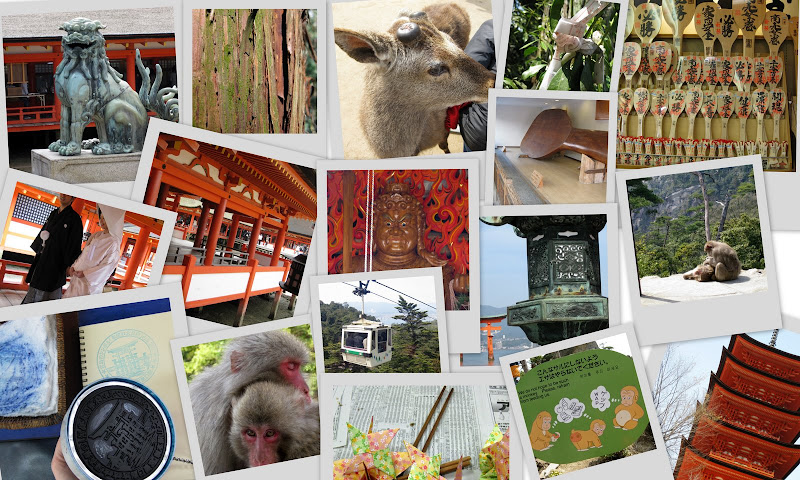
Most visitors to the island want to see the gigantic orange Itsukushima Shrine with its torii in the middle of the sea, eat the street food, view the sakura and shop in the market district, but personally, I was going for the monkeys and the world’s largest spatula. Because nothing says “I love you” like a spatula. This meant that after a morning of pleasant wandering about the shrines, feeding the deer, drinking glass-ball lemonade and listening to the cries of the local hawks floating over the sea, my lovely companions and I parted ways, with the idea of meeting up for karaoke in Tokyo the next weekend.

I took the Miyajima Ropeway cable car to the top of Mount Misen, a 535m elevation with beautiful views of the Inland Sea. Not recommended for people who are afraid of heights, but gorgeous if you’re okay with being suspended hundreds of feet in the air over sheer cliff faces and forests on two slender cables in a tiny metal box with 5 other people. I was fortunate to see some snow monkeys at play on the mountain peak (see video below) and then walked the hour-long 3km hike down the mountain to the park; easily one of the most beautiful, peaceful, fragrant hikes I’ve ever been on. When I reached the bottom of the mountain, I paused for some chicken yakitori and an almond-paste filled momiji manjÅ« cake made in the shape of a maple leaf.

The globally popular flat wooden spatula used to serve cooked rice is said to have been invented by a monk who lived on the island. Spatulas are a popular souvenir in all the Miyajima markets, and the island boasts the world’s largest rice spatula. I made a pilgrimage to see this wooden behemoth, and duly photographed it. This concludes the writing part of my trip to Miyajima. Now, sit back and enjoy my amateur nature videos.
Japan: Hygiene & Household Products

Okay, Indigirl – you asked for it, you got it. Let’s take an in-depth look into the fascinating world of Japanese hygiene and household products…

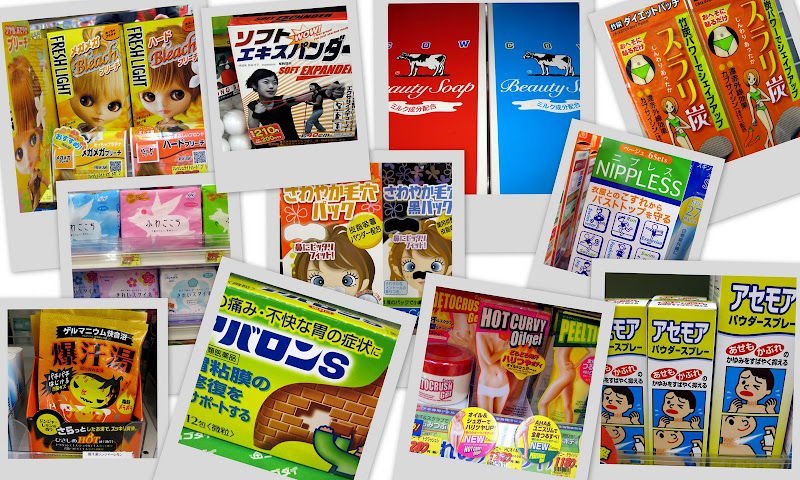
I’m sure I looked like the Biggest Douche in the Universe, moving slowly and methodically through the aisles of Himeji’s SuperDrug, camera poised, giggling softly to myself from time to time, snapping pictures of hair dye packets, soap, maxi pads and constipation drugs. I kept imagining what I would think if I was trying to buy some toothpaste at my local Shoppers Drug Mart at Yonge & Charles in Toronto, and some solitary female Japanese tourist was doing the same thing. I couldn’t picture it; the scenario seemed unlikely.

Beauty and Medicinal Products

There are always differences in how marketing is targeted at various cultures, especially when the product in question is something localized, like food. But hygiene products seem as though they should be universal, given that there are common physical needs we all share. Everyone has teeth that need brushing and flossing, skin that needs washing and moisturizing, armpits and feet that need deodorizing. If you prick us, do we not buy band-aids?

Still, I’ve found that the Asian fascination with English words makes it alluring to use them as a brand name or a cool addition to packaging, more to make the product look fancy than to actually describe it in an informative way. This whimsical use of my language makes shopping for even the most commonplace and mundane bathroom items an amusing exercise.

Examples:

  • * Cow beauty soap
  • * Flying Pig feminine hygiene products – “Honey, I have my period. Can you get me some maxi pads from the drug store?”, “When pigs fly!” …and so, a marketing idea was born.
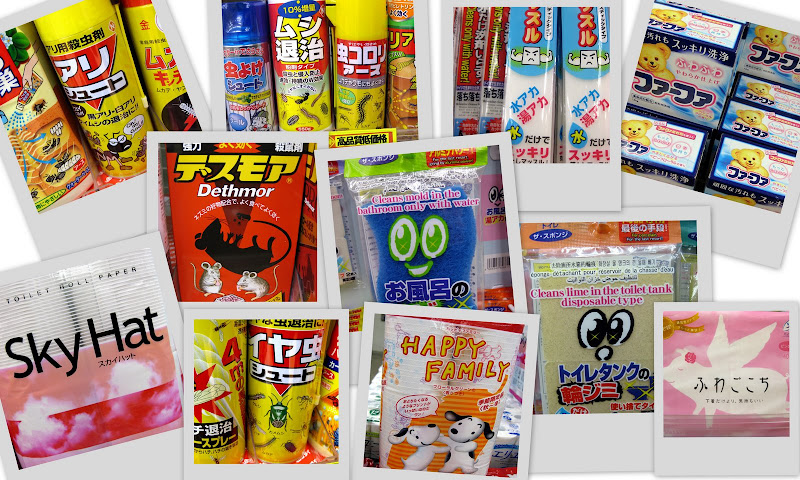
  • * Sky Hat toilet paper – featuring the following deep thought printed below the pink hat logo: “The form which gives satisfaction varies according to people. However, the common element is a satisfied feeling that high standards can produce.” (Whatever they paid their translator, I think they should ask for a refund.)
  • * Sexiest Musk Fantasy moisturizer – so wanted to export this, but feared the consequences of an accidental in-flight explosion might mean burning all my luggage, and possibly all the other passenger’s luggage as well, to get rid of the smell. Like Sex Panther from Anchorman.
  • * Hot Curvy OilGel – no clue how this works, where it should be applied, or what sort of toxic ingredients are inside, but I was nearly compelled to purchase it for the semi-pornographic “this is what you will look like if you use our product” image on the cover.

Some of the medicinal products were equally amusing. Lots of patches. Eye patches. Weight loss patches for girls. Nipple patches, called Nippless, presumably to prevent yourself from becoming “nipple-less” due to friction-based sports injuries. And almost a whole aisle of pore-cleaning patches, aka Biore strips. There is some serious pore cleanliness obsession happening in Japan, much like skin whitening was the obsession in Hong Kong. The Biore packages in Japan are nasty, as they have ultra-magnified close-ups of the forest of pore dirt that results from use. As with Pocky, there’s a separate area for Men’s Biore (because dudes get blocked pores, too). And when Biore strips fail, there’s always pore vacuumer, featuring silhouettes of women holding actual vacuum cleaners on the packaging: this is the Godzilla of pore cleaning products.

I also really enjoyed the use of hand-drawn illustrations rather than photographs to sell everything from bath salts to hair dye. The Manga characters advertising colours on Beauteen hair dye were only beaten out by the Blythe dolls showing the sort of blonde you can achieve with Fresh Light hair bleach. I’m sure my illustrator friends in North America and Europe are kicking themselves at missing out on the opportunity to cash in on the lucrative Asian pharmaceutical packaging market.

Cleaning Products and Insecticides

I loved the faces on all the scrubbing sponges for sale in the store. Some were flexing illustrated muscles, many looked like Mr. Hankey. All had very clear descriptions of precisely what they were to be used for: “Cleans lime in the toilet tank disposable type,” or “Cleans mold in the bathroom only with water.”

I don’t know what the story is with Japanese vermin and insects – I haven’t seen many bugs or rodents at all since arriving 2 weeks ago – but the battalion of repellents, poisons and toxic sprays at the drug store paint a horrifying picture. Millipedes. Centipedes. Megapedes. Wasps. Giant ants. On one alarmingly yellow can, talking ants (the ant is talking to one of its hill-mates, with a speech bubble above its head saying “Oh! My God!”). Maybe they only emerge in summer, but I’m sure as heck not sticking around to find out.